Cagliari and its historic districts
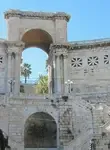
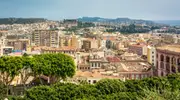
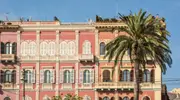
Cagliari can be explored through the Castello district, where the walls, Santa Maria Cathedral and Pisan towers overlook the upper town. The National Archaeological Museum displays Nuragic bronzes and the statues of Mont'e Prama, helping you understand the island's ancient history. In the Stampace district, the Basilica of San Saturnino and the narrow streets around Via Roma reveal another side of the old town centre. The fish stalls at San Benedetto Market also let you see the seafood sold in the morning, with stalls offering fish, shellfish and fresh herbs, so visit early in the day.
Alghero, Bosa and Tharros
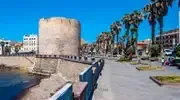
Alghero retains its seafront walls, defensive towers and old town, where you can still hear traces of the local Catalan dialect, Algherese Catalan. In Bosa, the colourful houses of the Sa Costa district climb towards Malaspina Castle, while the River Temo runs alongside the quays and old tanneries. The Tharros site, on the Sinis Peninsula near Cabras, features Roman columns, ancient streets and Punic remains facing the sea. Plan this visit for the late afternoon to enjoy the light on the ruins and the nearby beaches of the peninsula.
Beaches of La Maddalena and the Costa Smeralda
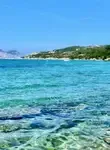
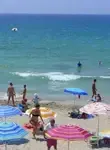
La Maddalena offers clear-water coves, granite rocks and views of the archipelago from the main island. On Caprera, connected to La Maddalena, the Garibaldi Museum and coastal paths add a historical and natural dimension to your visit. The Costa Smeralda, around Porto Cervo and Arzachena, is home to pale sandy beaches, sheltered coves and marinas where you can observe the summer crowds. Set aside time for a swim in a sheltered cove and check access to the beaches, which is sometimes easier early in the morning or outside the high season.
Su Nuraxi, Gennargentu and Piscinas
Su Nuraxi at Barumini features a UNESCO-listed Nuragic fortress, with a central tower, Cyclopean walls and an ancient village surrounding the site. In the Gennargentu, mountain villages such as Fonni provide access to landscapes of plateaux, forests and paths leading to the island's peaks. The Piscinas dunes, on the south-west coast near Arbus, form a vast stretch of sand shaped by the wind, with open beaches and a mining hinterland. Try some roasted porceddu, culurgiones filled with potato and mint, followed by a glass of Cannonau in a trattoria inland.
Sant’Antioco and coastal excursions
Sant’Antioco, on the island linked to the south-west by a causeway, is home to an early Christian basilica, catacombs and a harbour where you can still see traditional fishing. The Ferruccio Barreca Archaeological Museum presents the city's Phoenician and Punic heritage. Inland, the lagoons near the isthmus attract birds, while the coastal coves offer calm waters for swimming. From Cagliari or Carbonia, this area is easy to reach for a half-day visit, especially if you want to combine archaeology, the harbour and seafood.