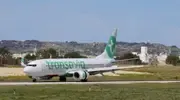
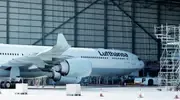
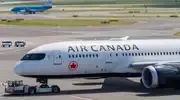
The Airline Eco-Criterion focuses on greenhouse gas emissions at source and highlights the levers that effectively help reduce co2 emissions and their impact. The weighting of the Airline Eco-Criterion primarily rewards the average fleet age, the presence of cleaner aircraft within the fleet, and R&D (or Investing in more sustainable aviation). Carbon offsetting and air operations management remain complementary levers for action. Finally, eco-programmes are not sufficient to make an airline an active contributor to the decarbonisation of the aviation sector. This is a good start, but it remains insufficient. The Airline Eco-Criterion therefore assigns them less weight.
The average age of the fleet
Airlines are investing heavily in fleet renewal, with fleet composition varying according to the airline and the types of flights operated. It is not uncommon to see older and newer aircraft within the same fleet. Airports & Travel takes the average age of the fleet into account, indicating that the higher it is, the greater the potential impact on overall kerosene consumption.
The presence of high-performance aircraft within the airline’s fleet
This component assesses whether or not a given airline’s fleet includes low-CO2-emission aircraft, such as the Airbus A330 neo-series or certain Boeing aircraft and the 777X. It focuses on aircraft currently in service.
Investment in the use of Sustainable aviation fuels (SAF)
The use and development of alternative fuels—Sustainable aviation fuels (SAF) (biofuels and synthetic fuels)—is at the heart of an effective approach to decarbonising the aviation sector. Sustainable aviation fuels (SAF) are currently a promising solution, but due to an industry that is still underdeveloped and not very competitive, they are not yet operational.
Investment in fleet renewal
Fleet renewal involves acquiring aircraft that are more energy-efficient than their predecessors. These next-generation aircraft have been designed to optimise fuel consumption, with features such as drag-reducing wings, new engines and improved payload capacity (optimised aircraft load capacity to avoid excessive fuel consumption). This dimension takes into account the effective planning of this type of investment.
R&D for a new generation of eco-efficient aircraft
Investment in research into new generations of aircraft relates to new fuselages, new engines and, of course, hydrogen- or electric-powered aircraft. This includes the necessary adaptation of infrastructure dedicated to this new type of aviation, such as electric charging and hydrogen supply systems.
Carbon offsetting programmes
There are currently 2 types of carbon offsetting: regulatory carbon offsetting and voluntary carbon offsetting. Both aim to offset residual CO2 emissions, that is, emissions that could not be reduced or eliminated at source.
Regulatory carbon offsetting includes the European Union Emissions Trading System EU-ETS (Emission Trading Scheme or carbon market) and CORSIA (Carbon Offsetting and Reduction Scheme for International Aviation).
These two systems follow the same principle : each year, the market sets a certain level of emissions credits (or emission allowances), which is then distributed among all system members. This level corresponds to the volume of greenhouse gas emissions that a company wishes to offset. At the end of the year, if its CO2 emissions exceed the annual allowances it has acquired, the company is penalised and must purchase additional allowances to restore balance. This is the polluter-pays principle. Conversely, a company that has emitted less than the amount covered by the emissions credits it purchased may carry those credits over to the following year. In all cases, the amount paid for this purpose contributes, directly or indirectly, to funding a carbon reduction or sequestration project.
Voluntary carbon offsetting does not, or only minimally, meet regulatory requirements (for labelling, monitoring, verification, etc.). Any entity can demonstrate its environmental commitment by funding carbon reduction or sequestration projects, such as forestry projects, renewable energy projects or projects focused on the efficient use of energy.
Optimisation of flight operations
This concerns the management by airlines of air traffic and operations both in flight and on the ground. This component covers all the operations an airline can implement to optimise its fuel consumption: improving flight plans, optimising the load/cargo carried in flight, and maintaining the aircraft and ensuring its proper condition. These actions are all the more effective when combined with those implemented by airports, particularly Eco-taxiing, APU optimisation (Auxiliary Power Unit or Auxiliary Power Group—GAP), etc.
Other environmental initiatives
Airlines can adopt other strategies to reduce their environmental impact. Eco-programmes focus more on overall environmental impact than on carbon footprint. These may include implementing a zero-single-use-plastic policy on board their flights or recycling tableware.
For further information:
Ministry for Ecological Transition and Territorial Cohesion - Aviation and Environment
Carbon Offsetting and Reduction Scheme for International Aviation - CORSIA
Roadmap for Decarbonizing the Aviation Sector
Voluntary Carbon Offsetting: Approaches and Limitations - ADEME