

Kazakhstan's national airline confirms a firm order for 25 Airbus A320neo and A321neo aircraft, with 25 additional purchase options. This strategic investment will enable the carrier to modernise its fleet and meet growing demand for air travel across its regional and international markets. The choice of the "Neo" (New Engine Option) configuration is no coincidence. These next-generation aircraft offer a significant reduction in fuel consumption and CO2 emissions. For Air Astana, the objective is to lower unit costs while increasing seat capacity on high-yield medium-haul routes. Thanks to the A321neo's extended range, Air Astana plans to expand its flight schedule to Europe and Asia. This capacity increase will enable it to optimise aircraft rotations departing from its main hubs. With improved cabin comfort and greater energy efficiency, the Kazakh airline is fulfilling its ambitions for modernisation and growth.


AIRLINE
Air Astana (KC)
Book a plane ticket with Air Astana
About the airline Air Astana
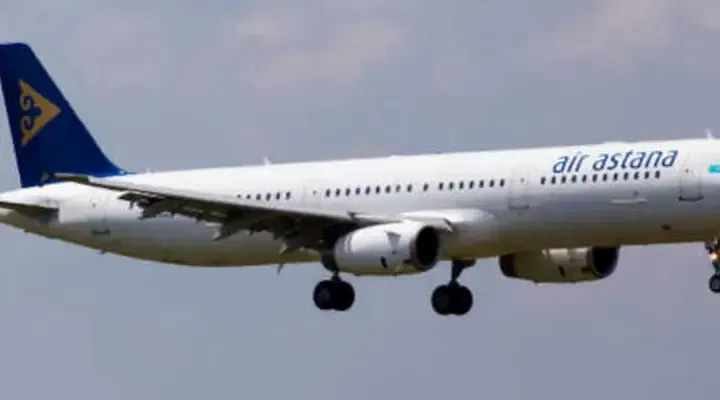
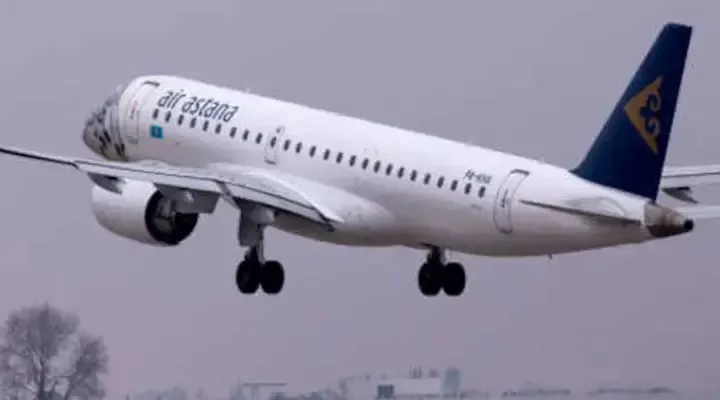
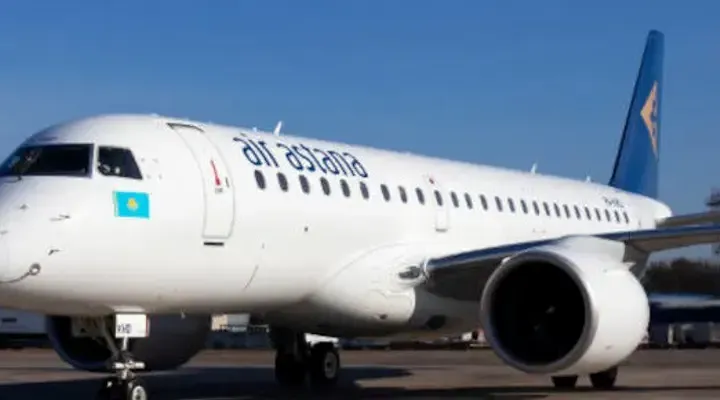
Founded in 2001, Air Astana serves a vast network of destinations in Asia, Europe, the Middle East, and Russia, connecting Kazakhstan to key international cities. After launching its operations in 2002, the airline rapidly expanded its network by adding destinations in Central Asia, Europe, and the Middle East. Air Astana has also invested in a modern fleet of aircraft, including Airbus A320, Boeing 767, and Airbus A321. In 2019, it strengthened its position on international markets by launching new routes to popular destinations such as London, Istanbul, and Dubai. In 2024, the airline improved its long-haul air connections, particularly on the Almaty-London route, with the introduction of the Airbus A321LR, a narrow-body aircraft offering more comfort and reducing flight duration for passengers. Air Astana continues to grow, adapting its services to market needs and reinforcing its role as a leader in regional aviation. Thanks to its modern fleet and quality service, the airline remains a key player in air connectivity between Kazakhstan and the rest of the world.
Air Astana at a glance
Air Astana news
Air Astana launches Salalah route and prepares to launch Tokyo-Narita route
Air Astana is strengthening its network with two major new routes. The Kazakh airline will launch flights to Salalah in Oman from Almaty and Astana in late October 2026. It also plans to operate a route between Almaty and Tokyo-Narita from 30 November, subject to approval.

Air Astana and environmental sustainability
Average age of the fleet Air Astana
Examples of top-performing aircraft operated by Air Astana
Investments for the use of sustainable aviation fuels
Air Astana, in partnership with the European Bank for Reconstruction and Development (EBRD) and KazMunaiGas, is participating in a study to evaluate the potential of producing and using Sustainable aviation fuels (SAF) in Kazakhstan. The goal is to achieve a 5% SAF target across all its flights by 2030. Currently, it does not use any. Thanks to its collaboration with PetroChina International Kazakhstan for Jet A-1 fuel supply, the group is also considering importing SAF directly from China.
Investment in fleet renewal
In 2024, the airline modernised its fleet by acquiring 50 Airbus A320s, including 13 A320neos.
R&D for a new generation of eco-efficient aircraft
Carbon offsetting programmes
The airline is subject to the European Union Emissions Trading Scheme (EU ETS) and also to the Carbon Offsetting and Reduction Scheme for international aviation (CORSIA).
Optimisation of flight operations
The airline optimises its operations through route planning, reducing aircraft weight, and training pilots in more fuel-efficient flight techniques.
Other environmental initiatives
The airline has implemented effective waste management procedures, complemented by an electronic document management system designed to reduce paper consumption. It is also implementing a Programme de Développement Bas-Carbone (PDBC) for the 2023–2032 period. Since 2020, the group has promoted the use of biodegradable materials on board by replacing plastic stirrers with wooden ones, single-use cups with recyclable cups, and plastic bags for blankets with paper bands. Most comfort kits are now packaged in bamboo and kraft paper. Lastly, the airline has adopted a waste management programme based on three pillars: reduction, recycling, and responsible disposal.

