Book a plane ticket with TUI fly

Departure
From...
Arrival
To...
Dates
Dates of your trip
Travellers
1 adult
Round-trip flightsOne-wayMulti-city

About the airline TUI fly

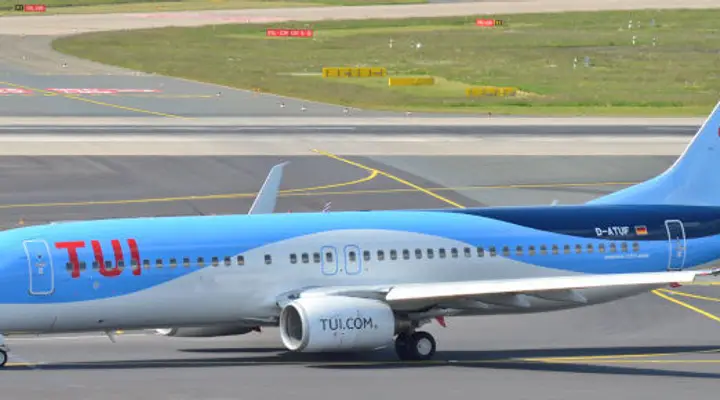
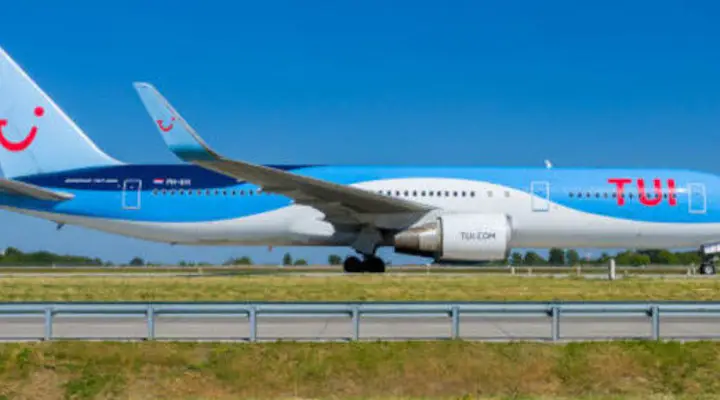
TUI Fly operates regular flights and low-cost charters. In 2009, the company signed a partnership with Air Berlin. Air Berlin will be able to rent TUI Fly planes to operate regular flights, primarily to Austria, Italy, and Croatia. TUI Fly will use the rest of its fleet to operate charter flights. In 2016, TUI Fly and Etihad Airways signed an agreement with Air Berlin to create a leisure aviation group specialising in tourist packages to Germany, Austria, and Switzerland. Its fleet is primarily composed of Airbus A321s and Boeing 737s and 767s. Despite Air Berlin's bankruptcy filing at the end of 2017, this agreement was a clear success. Etihad Airways and TUI Fly continue their cooperation. The airline TUI Fly serves 40 destinations in Europe, Africa, and Asia.

TUI fly at a glance

X3
Not provided
Germany
2007
26 Aircraft:
Not provided
FriendChips (Bluemiles)

TUI fly and environmental sustainability

Eco-criterion TUI fly

Airports & Travel recognises the positive steps taken by airlines to protect the environment. An Eco-criterion score is displayed as soon as actions to reduce the airline's environmental footprint demonstrate that the airline has reached an initial level of environmental commitment.

Data currently being updated

Average age of the fleet TUI fly

This is the average age of all the aircraft currently operated by the airline, and is updated twice a year.
10.2 years

Examples of top-performing aircraft operated by TUI fly

These are the aircraft listed in the airline’s flight schedule that are recognised for their energy efficiency. Certain technological advancements allow for fuel savings of up to 20% compared with the average fuel consumption of aircraft operating the same type of flights. Using such technology thus reduces planes’ carbon footprint by the same amount.
Boeing 737
Boeing 737-800 Winglets

Investments for the use of sustainable aviation fuels

Some fuels reduce CO2 emissions by 80% over their life cycle compared with fossil fuels. They are called Sustainable aviation fuels (SAF). They can be blended with kerosene in varying quantities. Their large-scale deployment requires significant investment from all stakeholders involved.
No information has been provided by the airline TUI fly

Investment in fleet renewal

Driven by the growing environmental imperative, aircraft coming off production lines are very often more efficient than earlier versions. The same applies to cars. Fleet renewal therefore helps, in this respect, to contain the growth of greenhouse gas emissions.
TUI fly doesn't invest in a more efficient fleet

R&D for a new generation of eco-efficient aircraft

All these investments are for research and development of cutting-edge technologies for tomorrow's aircraft, whether hydrogen-powered, electric or innovatively designed, for the benefit of the environment. This includes funding programmes and partnerships with laboratories and industry partners.
No information has been provided by the airline TUI fly

Carbon offsetting programmes

These are all the programmes in which the airline participates voluntarily or as required to offset its CO2 emissions. The principle is based on purchasing carbon credits that fund environmental programmes reducing the company’s overall footprint. Such carbon credit schemes include the European Union Emissions Trading System (EU ETS) and CORSIA for international aviation compensation.
The airline TUI fly has no carbon offset programme

Optimisation of flight operations

These are all the actions and investments that enable airlines to optimise their ground and in-flight operations, thereby helping to reduce air transport’s overall energy usage.
TUI fly does not optimise its flight operations.

Other environmental initiatives

All initiatives to preserve the environment are beneficial. Here we list the other environmental actions that the airline has put in place, such as the waste sorting and recycling policy on board, the elimination of single-use plastics and efforts to reduce food waste.
  • Fleet modernisation with fuel-efficient aircraft.
  • Optimisation of load factors and flight routes.
  • Limiting baggage weight and optimal weight distribution within the aircraft.
  • Training of flight crew and pilots in environmentally responsible practices.